All content on this site is intended for healthcare professionals only. By acknowledging this message and accessing the information on this website you are confirming that you are a healthcare professional. If you are a patient or carer, please visit Know GvHD.
The GvHD Hub website uses a third-party service provided by Google that dynamically translates web content. Translations are machine generated, so may not be an exact or complete translation, and the GvHD Hub cannot guarantee the accuracy of translated content. The GvHD Hub and its employees will not be liable for any direct, indirect, or consequential damages (even if foreseeable) resulting from use of the Google Translate feature. For further support with Google Translate, visit Google Translate Help.


The GVHD Hub is an independent medical education platform, sponsored by Medac and supported through independent educational grants from Incyte, Sanofi and Therakos. Funders are allowed no direct influence on our content. The levels of sponsorship listed are reflective of the amount of funding given. View funders.
Now you can support HCPs in making informed decisions for their patients
Your contribution helps us continuously deliver expertly curated content to HCPs worldwide. You will also have the opportunity to make a content suggestion for consideration and receive updates on the impact contributions are making to our content.
Find out more
Create an account to access:
Bookmark & personalize site content
Receive alerts for new content in your areas of interest
View GvHD content recommended for you
ECP in the treatment of acute and chronic GvHD: Guided case studies
Do you know... A patient with which organ manifestation of GvHD would be most appropriate for treatment with ECP?
Question 1 / 1
Knowledge check | According to SIdEM and GITMO recommendations, when should response to ECP be measured in patients with cGvHD?
A
Every 3 weeks
B
Every 2 weeks
C
Every week
D
Every month
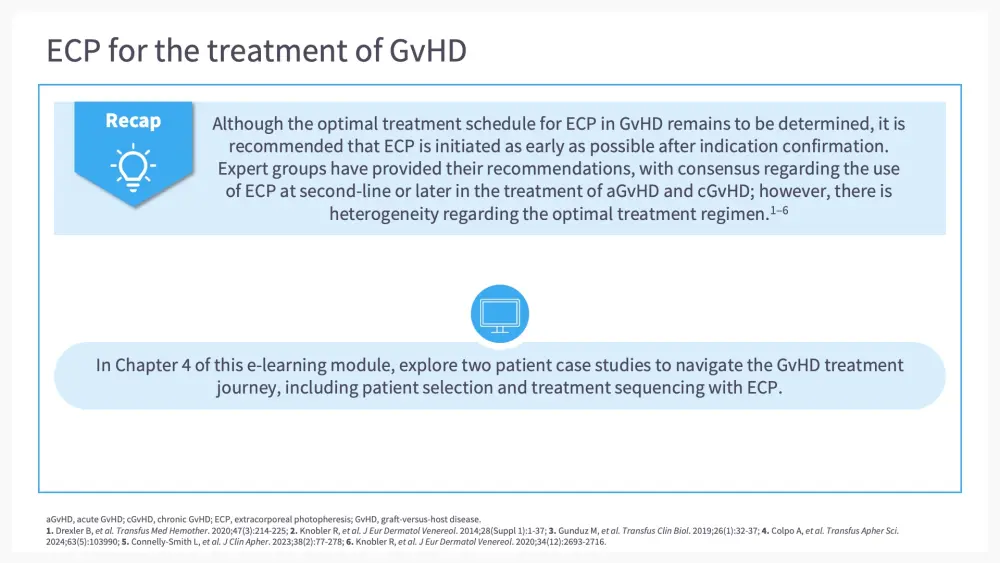
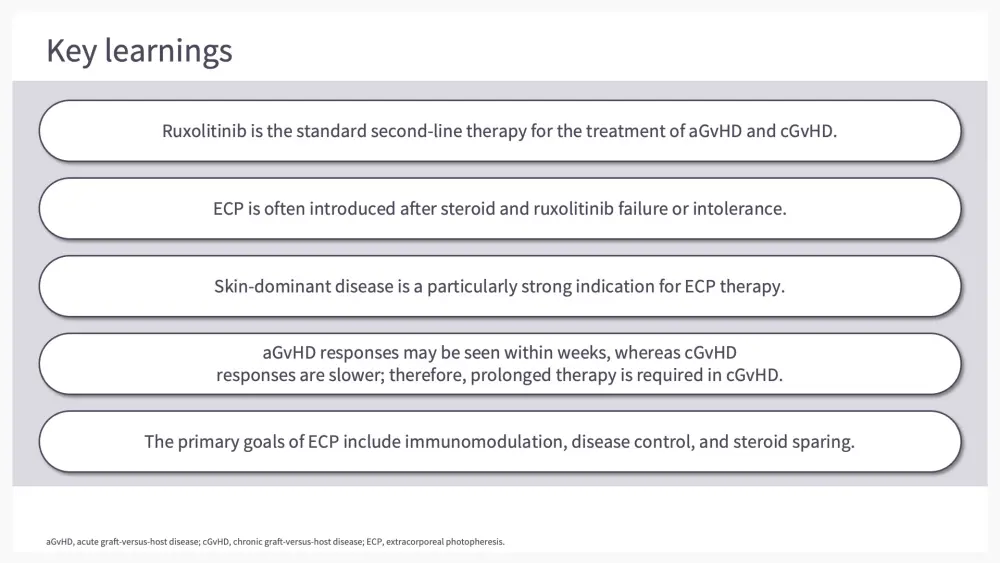
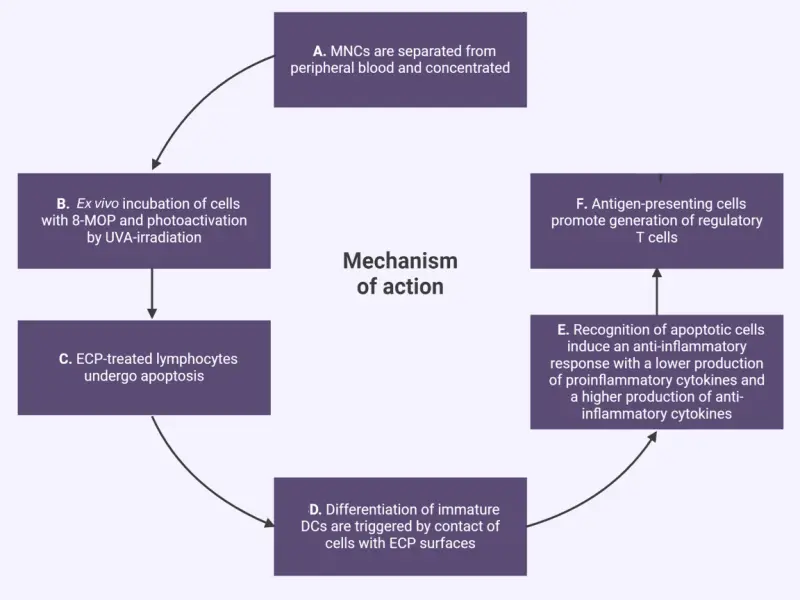
Extracorporeal photopheresis (ECP) is typically considered as a second-line or later treatment option for patients with acute or chronic graft-versus-host disease (GvHD) who do not respond to corticosteroids or other immunosuppressive treatments or who experience relapse after an initial response and are therefore classified as having steroid-refractory (SR) GvHD.
In the final chapter of this e-learning module, explore two patient case studies to navigate the GvHD treatment journey, including patient selection and treatment sequencing with ECP in both acute and chronic GvHD.
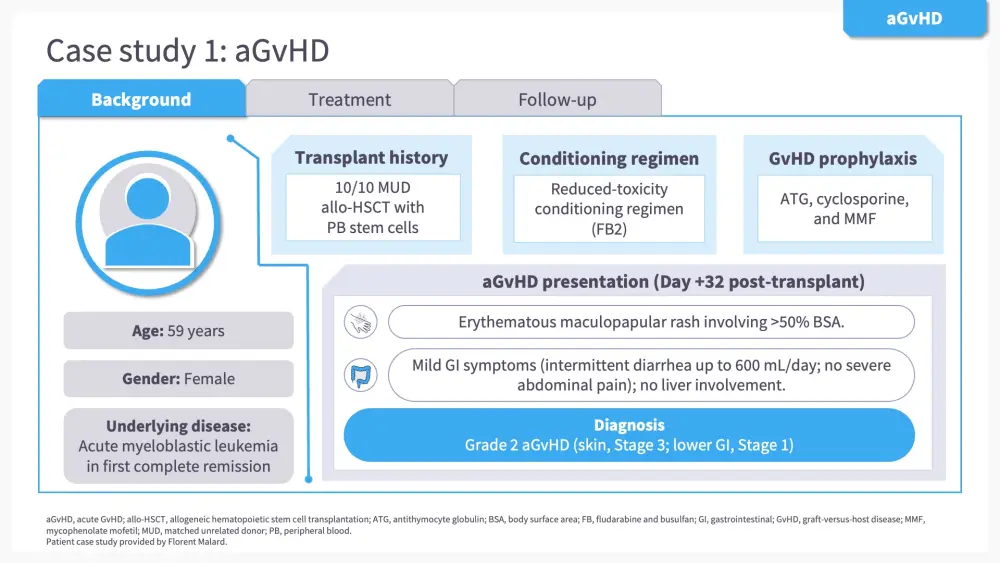
Click through the slides below to explore the first patient case study in acute GvHD.
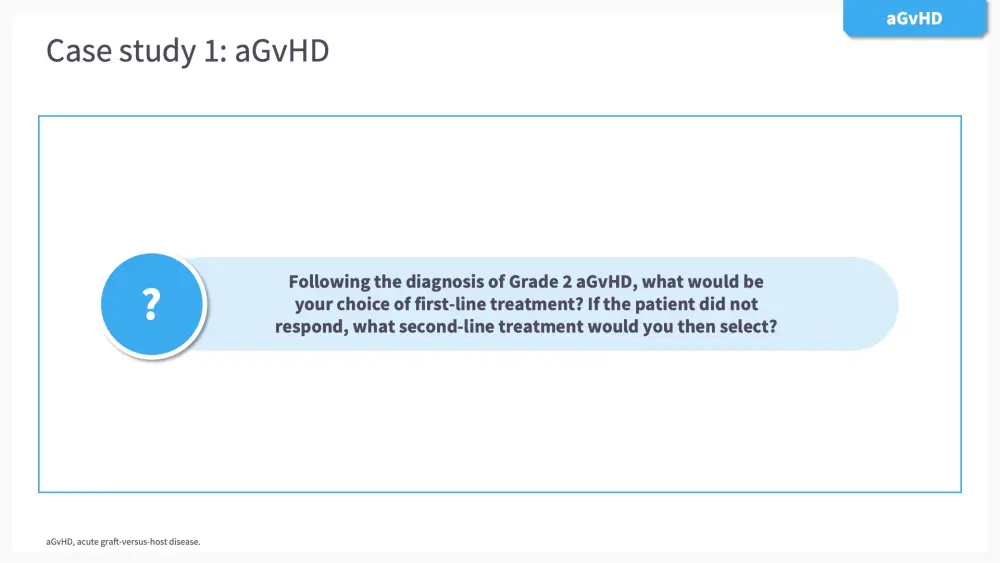
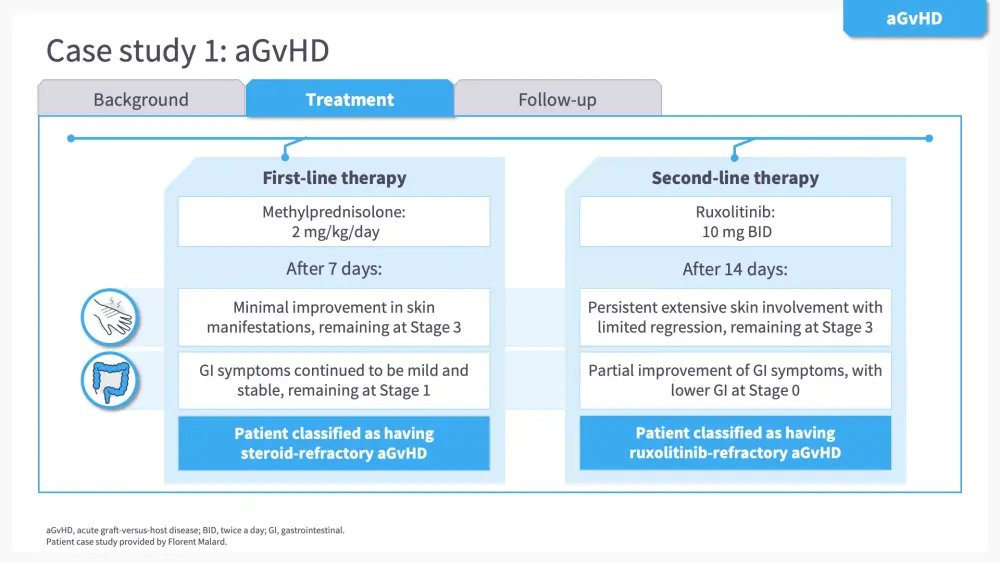
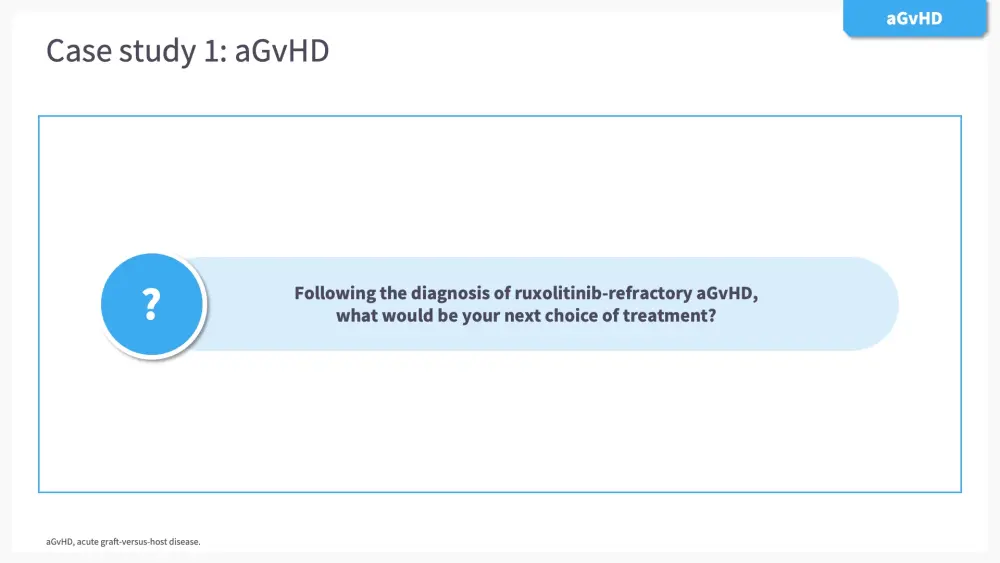
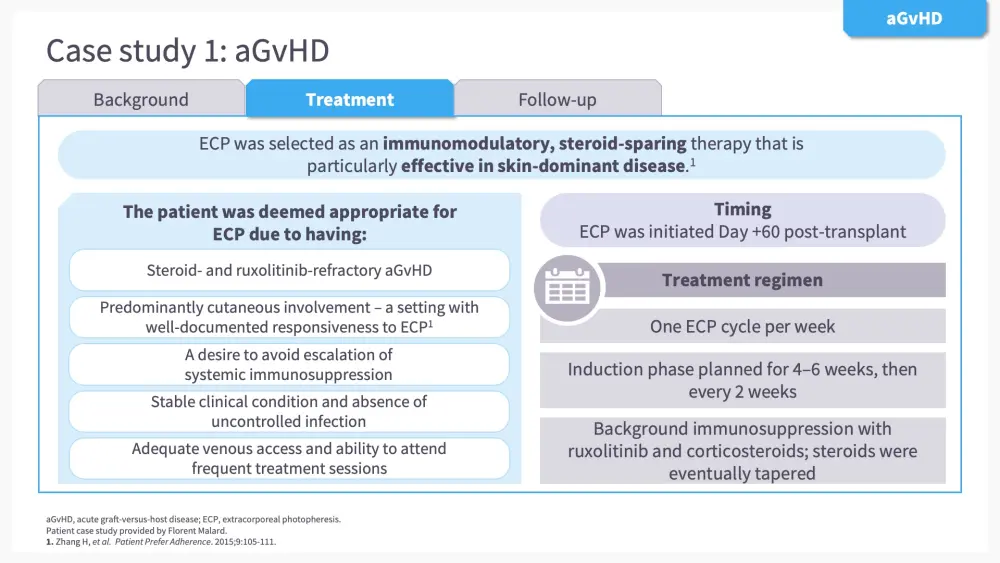
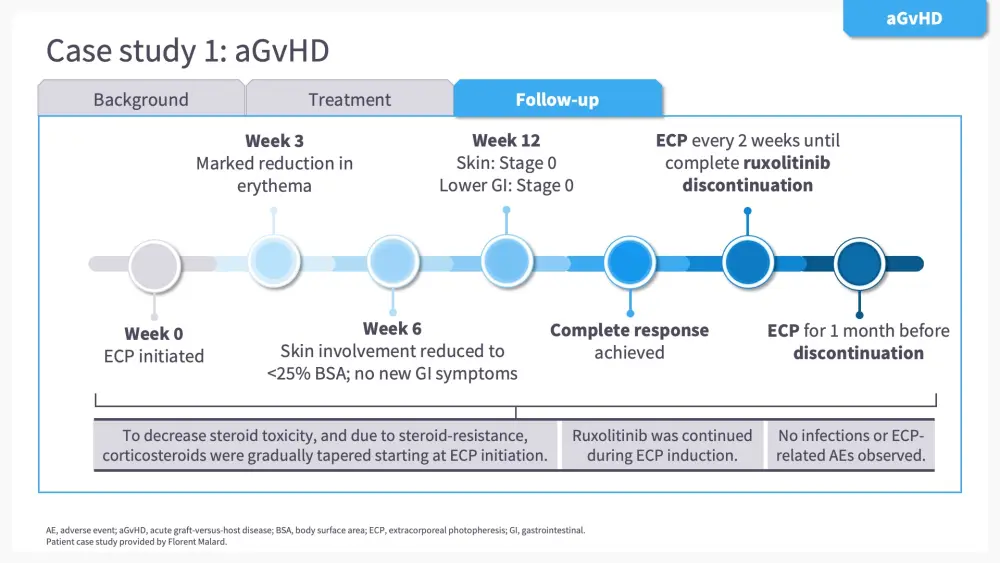
Question 1 / 1
Knowledge check | Which of the following statements best describes the rationale for ECP for the treatment of aGvHD?
A
It is an immunomodulatory and steroid-sparing therapy
B
It is an immunosuppressive therapy
C
It enables increased steroid dosing
D
It is primarily a supportive care measure, in combination with other agents
Click through the slides below to explore the second patient case study in chronic GvHD.
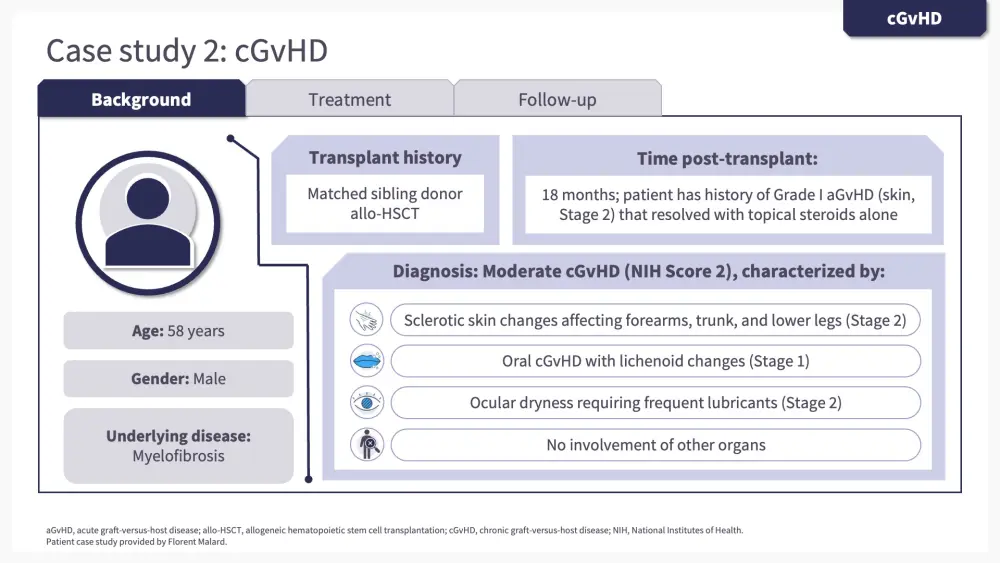
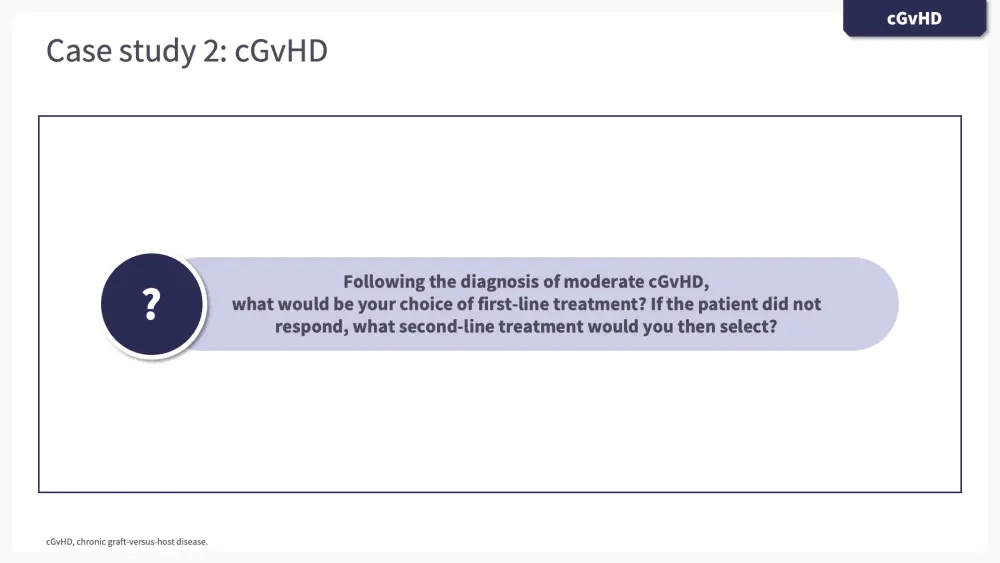
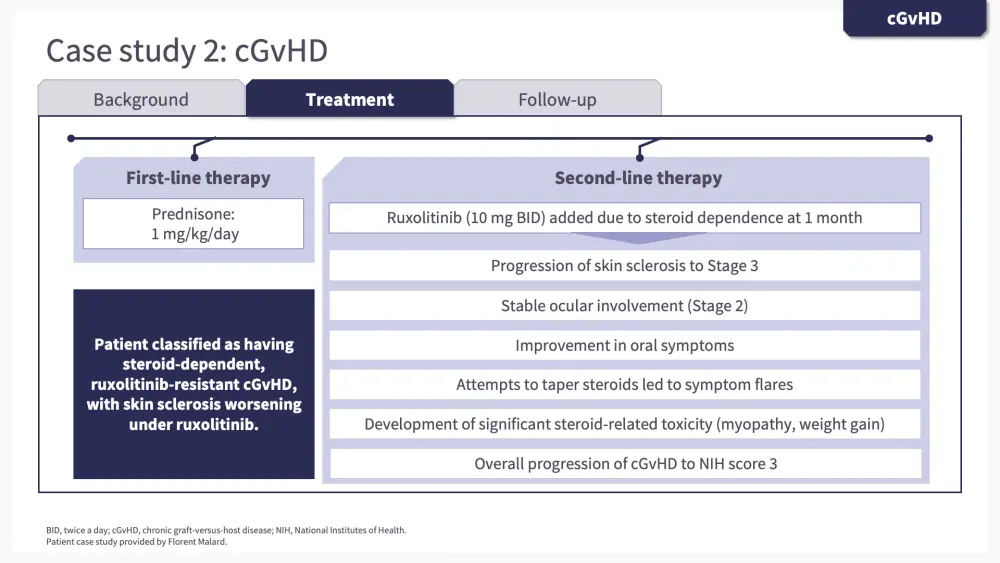
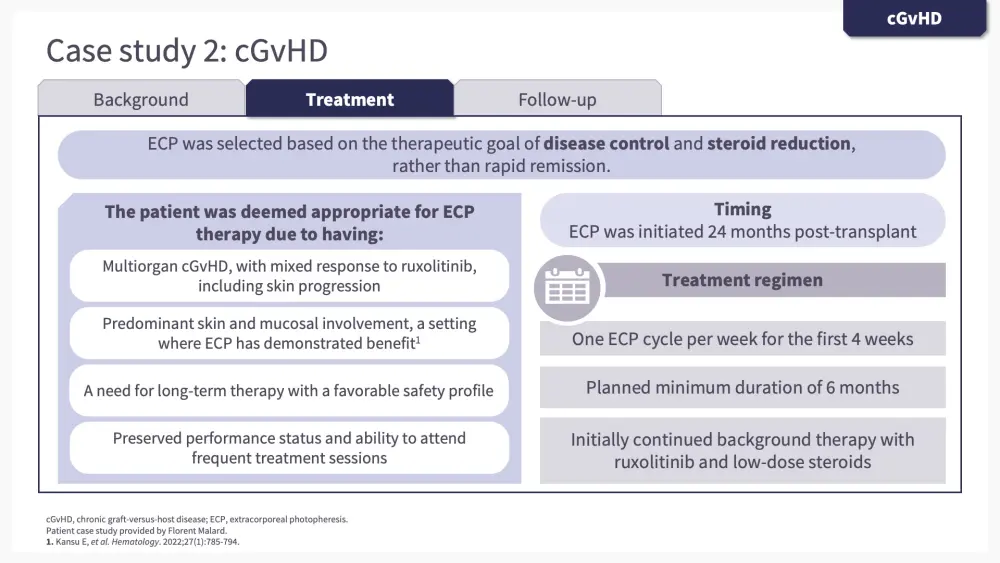
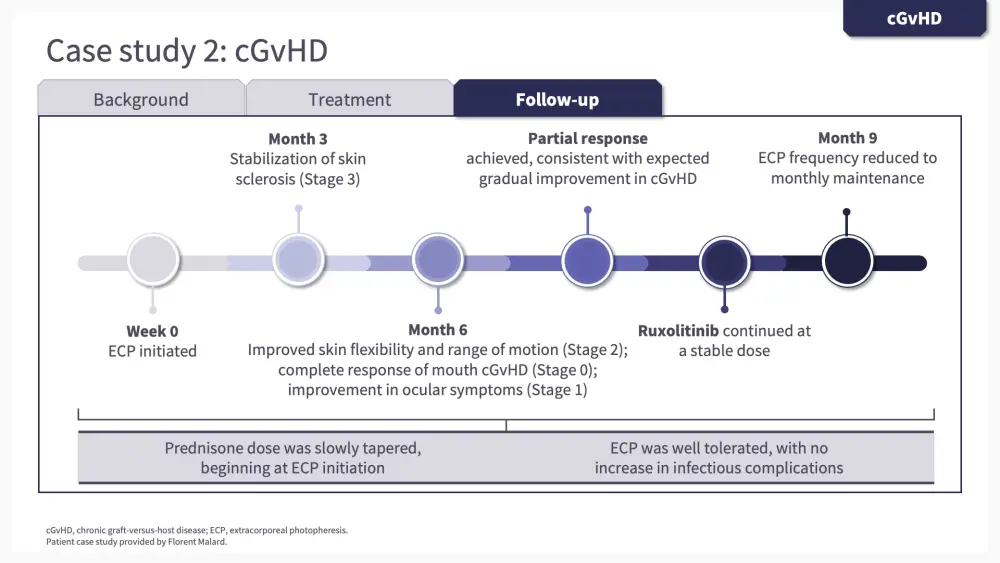
These patient case studies were provided by Florent Malard.
This educational resource is independently supported by Therakos. All content was developed by SES in collaboration with an expert steering committee. Funders were allowed no influence on the content of this resource.
Please indicate your level of agreement with the following statements:
The content was clear and easy to understand
The content addressed the learning objectives
The content was relevant to my practice
I will change my clinical practice as a result of this content
This content is accurate as of the date of publication and is not updated retrospectively. Please refer to the latest available evidence, guidelines, and relevant regulatory information when making clinical decisions.
More from this series:

.webp)