All content on this site is intended for healthcare professionals only. By acknowledging this message and accessing the information on this website you are confirming that you are a healthcare professional. If you are a patient or carer, please visit Know GvHD.
The GvHD Hub website uses a third-party service provided by Google that dynamically translates web content. Translations are machine generated, so may not be an exact or complete translation, and the GvHD Hub cannot guarantee the accuracy of translated content. The GvHD Hub and its employees will not be liable for any direct, indirect, or consequential damages (even if foreseeable) resulting from use of the Google Translate feature. For further support with Google Translate, visit Google Translate Help.


The GVHD Hub is an independent medical education platform, sponsored by Medac and supported through independent educational grants from Incyte, Sanofi and Therakos. Funders are allowed no direct influence on our content. The levels of sponsorship listed are reflective of the amount of funding given. View funders.
Now you can support HCPs in making informed decisions for their patients
Your contribution helps us continuously deliver expertly curated content to HCPs worldwide. You will also have the opportunity to make a content suggestion for consideration and receive updates on the impact contributions are making to our content.
Find out more
Create an account to access:
Bookmark & personalize site content
Receive alerts for new content in your areas of interest
View GvHD content recommended for you
Clinical data supporting ECP in the treatment of GvHD
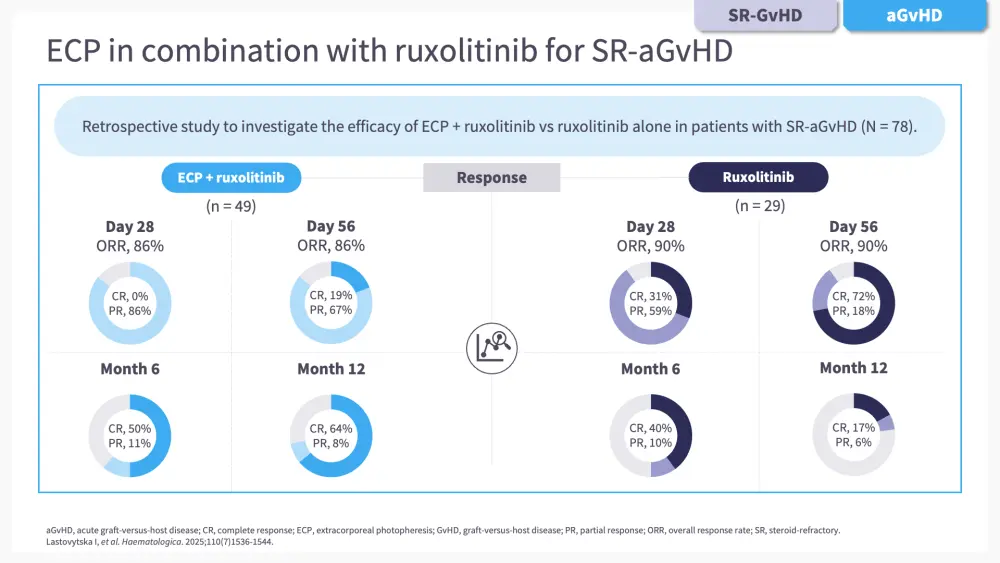
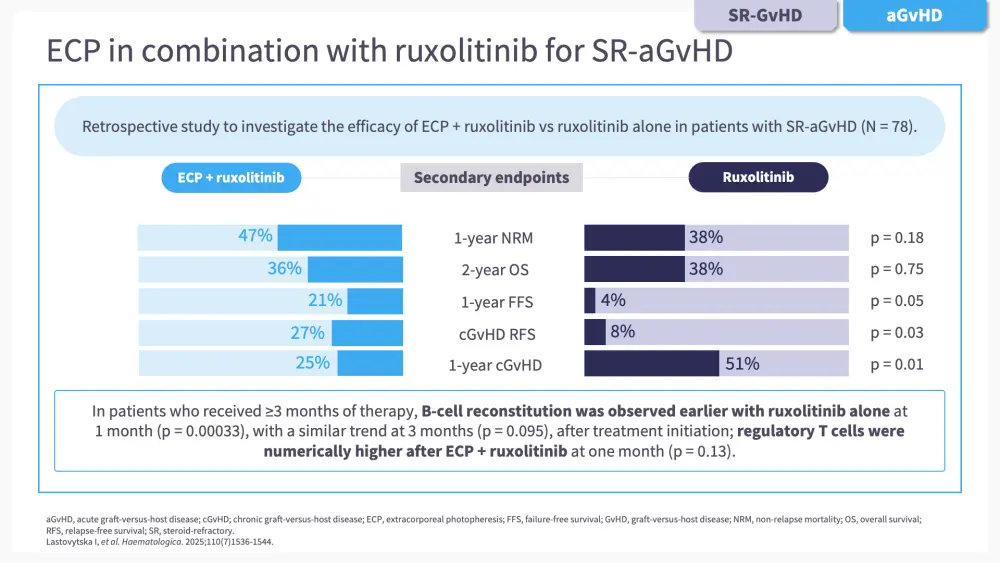
Do you know... In a retrospective study by Lastovytska et al., what was the CR rate at Month 12 in patients with SR-aGvHD treated with ECP + ruxolitinib?
Question 1 / 1
Knowledge check | Which of the following statements does not accurately reflect the ongoing unmet needs in cGvHD?
A
Over two-thirds of patients require subsequent therapy following first-line corticosteroids due to lack of efficacy or intolerance.
B
Prolonged use of corticosteroids is associated with metabolic and bone complications, as well as increased risk of infections.
C
Treatment advances for highly morbid cGvHD manifestations are limited by difficulties in conducting clinical trials and the absence of effective organ-specific strategies.
D
Despite treatment advances, cGvHD occurs in 20% of patients who undergo allo-HSCT.
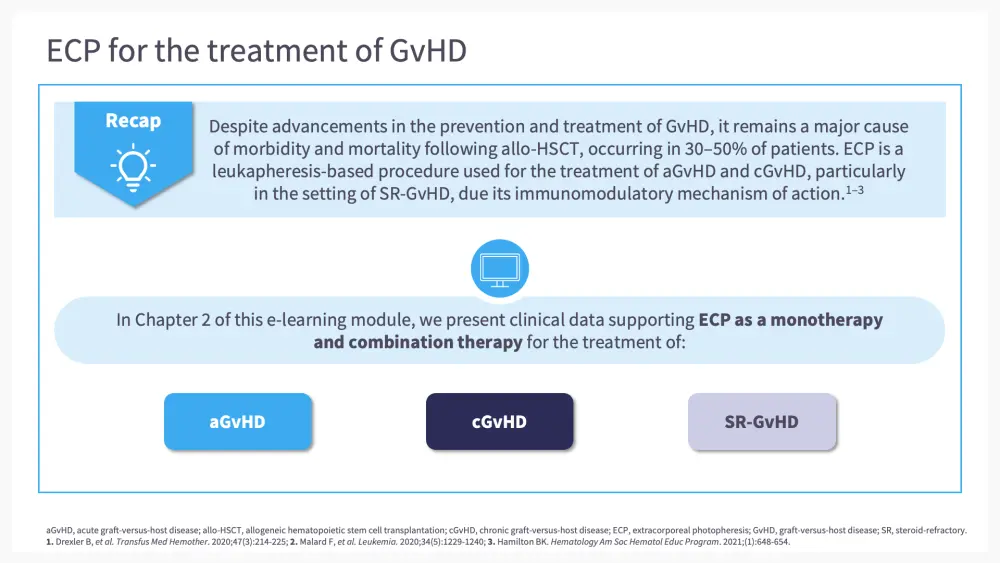
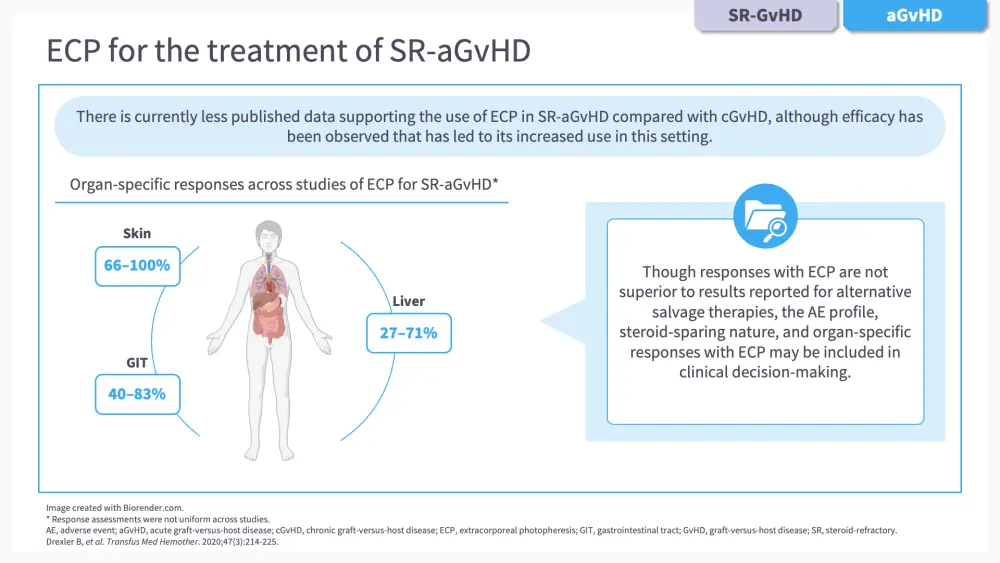
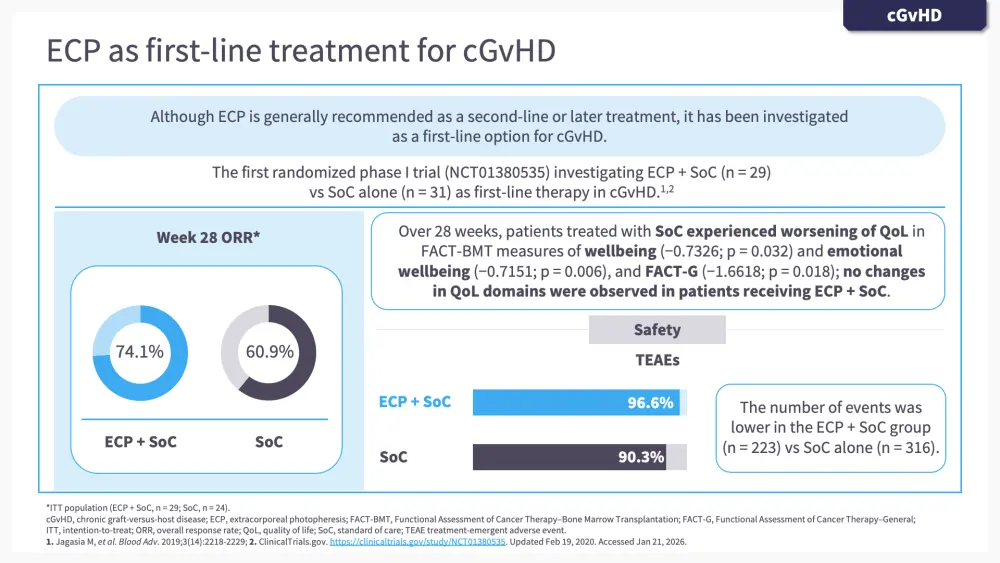
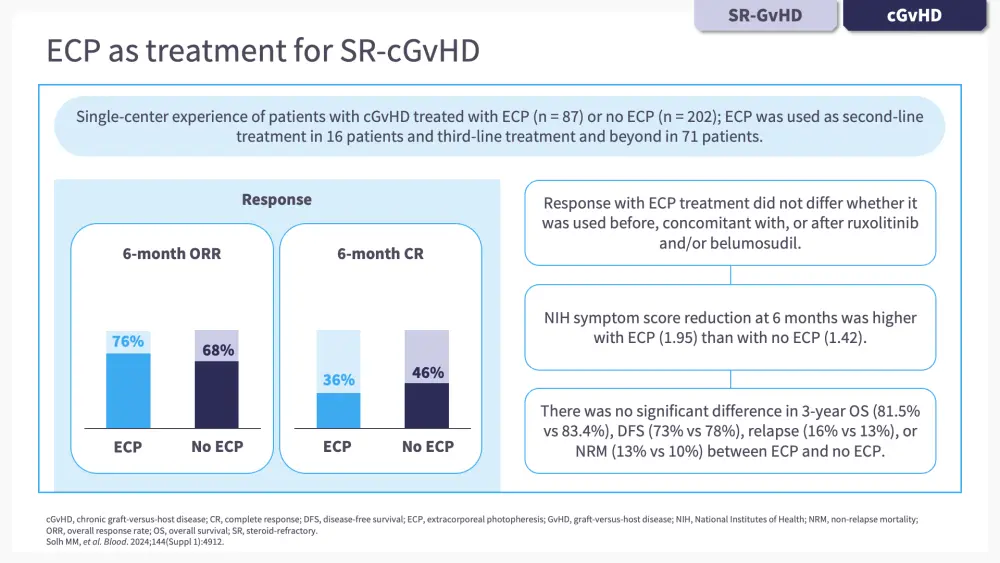
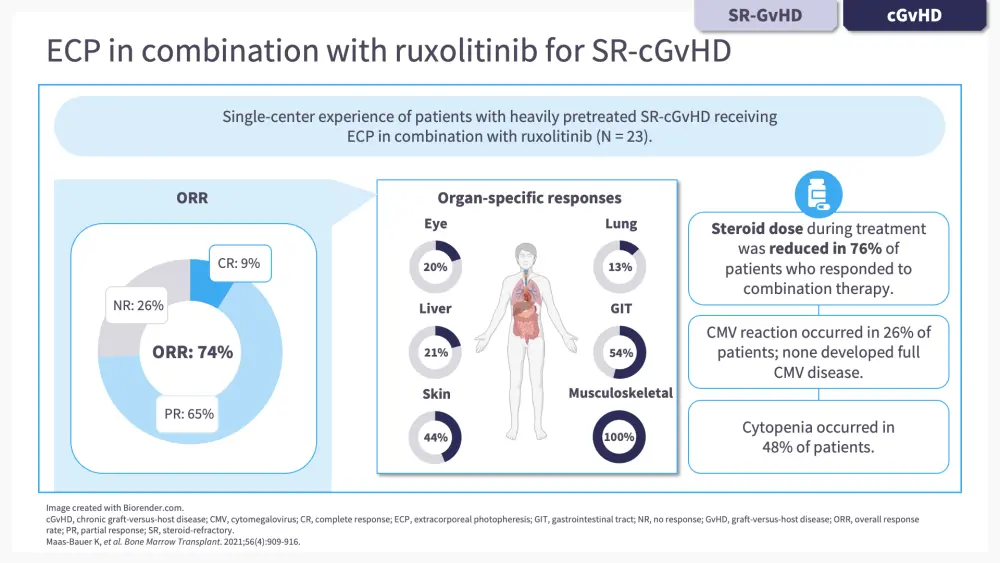
Extracorporeal photopheresis (ECP) has been investigated for the treatment of acute and chronic graft-versus-host disease (GvHD) as both monotherapy and in combination with other agents.
In the second chapter of this e-learning module, we go through some of the clinical findings supporting the use of ECP either alone or in combination with other agents, including ruxolitinib, belumosudil, interleukin-2 (IL-2), and axatilimab, in patients with GvHD.
Click through the slides below to learn more.
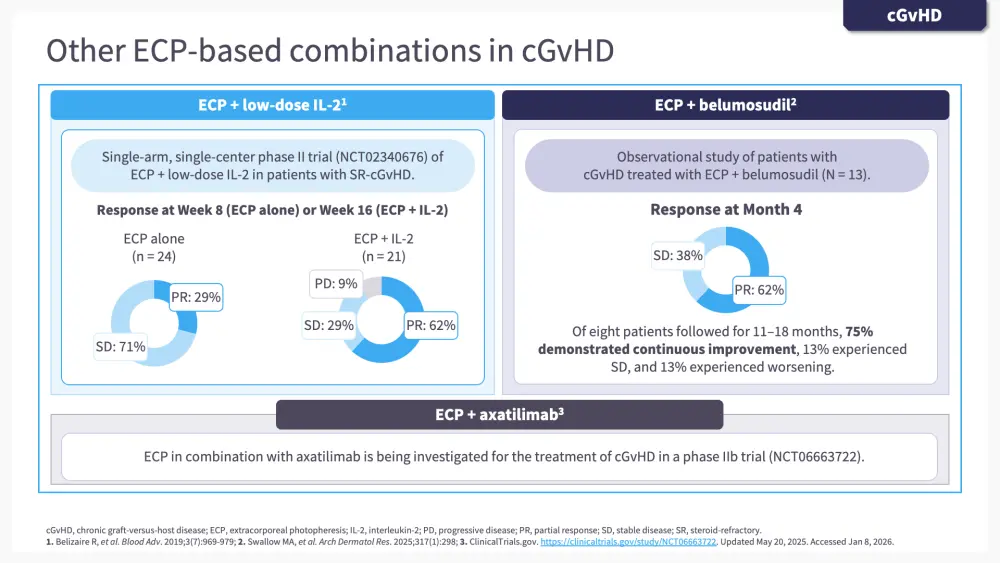
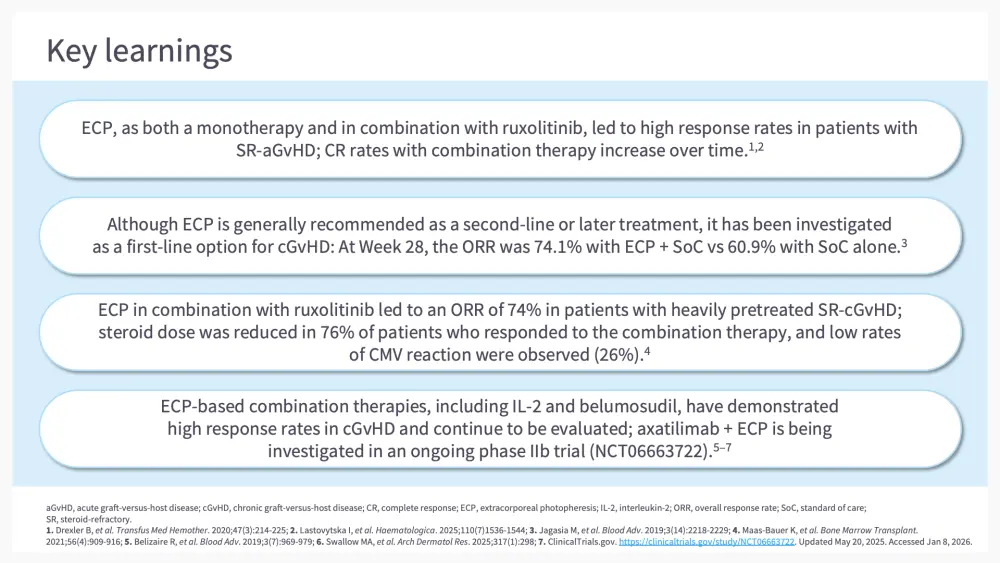
To learn more about the guidelines and recommendations for ECP in GvHD, go to Chapter 3 | Guidelines and recommendations for the use of ECP in the treatment of GvHD.
This educational resource is independently supported by Therakos. All content was developed by SES in collaboration with an expert steering committee. Funders were allowed no influence on the content of this resource.
Please indicate your level of agreement with the following statements:
The content was clear and easy to understand
The content addressed the learning objectives
The content was relevant to my practice
I will change my clinical practice as a result of this content
This content is accurate as of the date of publication and is not updated retrospectively. Please refer to the latest available evidence, guidelines, and relevant regulatory information when making clinical decisions.
More from this series:

.webp)