All content on this site is intended for healthcare professionals only. By acknowledging this message and accessing the information on this website you are confirming that you are a healthcare professional. If you are a patient or carer, please visit Know GvHD.
The GvHD Hub website uses a third-party service provided by Google that dynamically translates web content. Translations are machine generated, so may not be an exact or complete translation, and the GvHD Hub cannot guarantee the accuracy of translated content. The GvHD Hub and its employees will not be liable for any direct, indirect, or consequential damages (even if foreseeable) resulting from use of the Google Translate feature. For further support with Google Translate, visit Google Translate Help.


The GVHD Hub is an independent medical education platform, sponsored by Medac and supported through independent educational grants from Incyte, Sanofi and Therakos. Funders are allowed no direct influence on our content. The levels of sponsorship listed are reflective of the amount of funding given. View funders.
Now you can support HCPs in making informed decisions for their patients
Your contribution helps us continuously deliver expertly curated content to HCPs worldwide. You will also have the opportunity to make a content suggestion for consideration and receive updates on the impact contributions are making to our content.
Find out more
Create an account to access:
Bookmark & personalize site content
Receive alerts for new content in your areas of interest
View GvHD content recommended for you
 Michelle Kenyon
Do you know... Which of the following features form part of the role of nurses in the care of patients with acute GvHD?
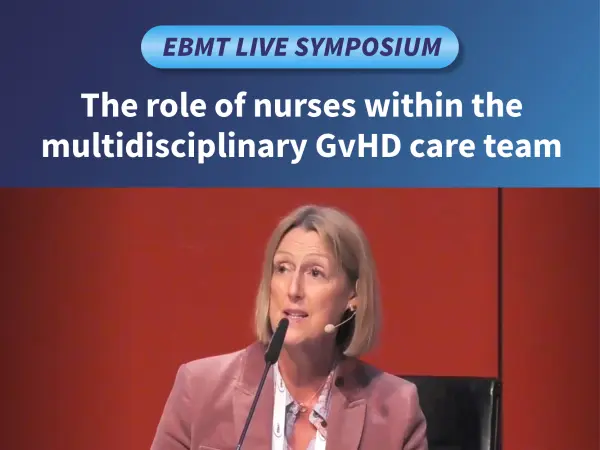
During the 52nd Annual Meeting of the EBMT, the GvHD Hub held a live symposium on March 24, 2026, titled “Focusing GvHD care through the eyes of providers and patients: Practical insights on ECP”. Here, we share a presentation by Michelle Kenyon, London, UK, describing the role of nurses within the multidisciplinary care of patients with graft-versus-host disease (GvHD).
Symposium | The role of nurses within the multidisciplinary GvHD care team
Symposium | The role of nurses within the multidisciplinary GvHD care team
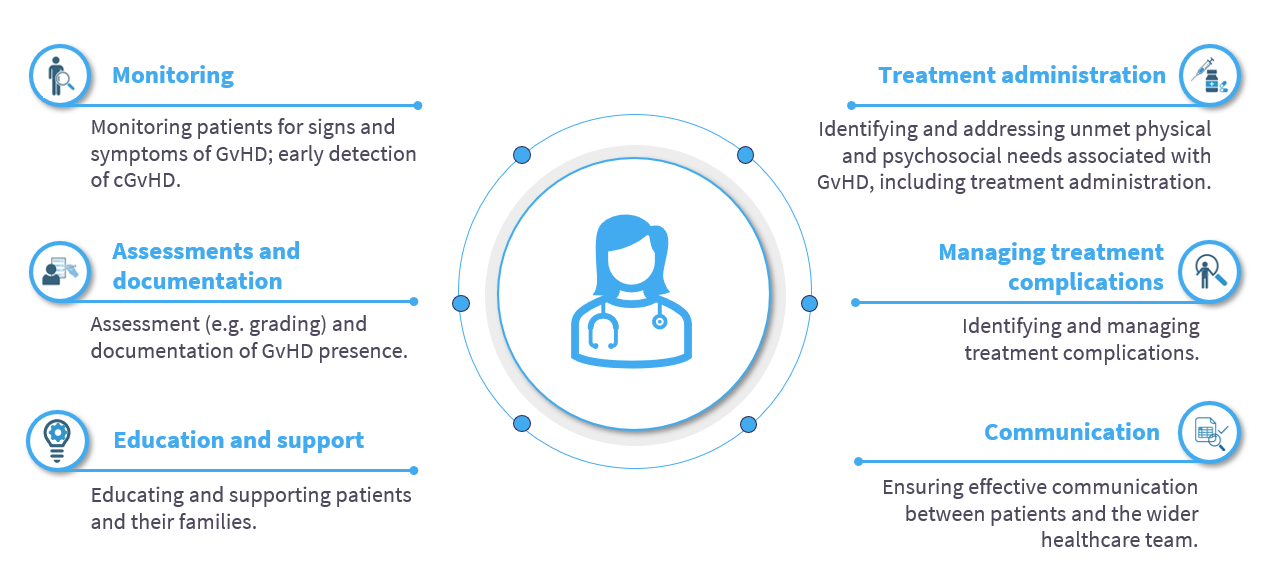
Kenyon highlights the essential role of nurses in the multidisciplinary management of GvHD, underlining their involvement in continuous patient monitoring and assessment of symptoms, administration of treatment, and management of complications, alongside their integral role in providing education and continuous support to patients and their families. Kenyon also emphasizes the importance of effective communication, noting that nurses act as key facilitators within the multidisciplinary team (MDT) to ensure clear information exchange between patients and the wider healthcare team.
Key points
- Nurses have many roles in GvHD care (Figure 1), playing a central role in supporting patients throughout their treatment journey.
Figure 1. Overview of the role of nurses in GvHD care1
- The role of nurses spans the entire GvHD journey, with distinct yet overlapping responsibilities at different stages of the care pathway. For example:
- Pre-transplant: Educating patients and preparing them for post-transplant care.
- Post-transplant: Observing patients at their bedside, monitoring vital signs, and symptom assessment.
- Acute GvHD (aGvHD): Ensuring prompt recognition and treatment, symptom monitoring and care, timely escalation, infection prevention, and comprehensive patient and family support.
- Chronic GvHD (cGvHD): Supporting long-term symptom management through ongoing assessments, medication and side-effect monitoring, specialty referrals, patient and family support, and lifestyle and health promotion.
- Long-term follow-up: Providing support with rehabilitiation and suvivorship share, including routine assessments, lifestyle education, and emotional support.
- Nurses play a key role in the identification of GvHD symptoms and are uniquely positioned at the bedside to detect subtle changes in a patient’s condition. In addition, patients often feel more comfortable reporting new symptoms to nurses due to the trusted relationships they build.
- These factors facilitate early identification of GvHD, enabling prompt intervention and potential for optimizing patient outcomes.
- Validated tools can be used to facilitate consistent symptom assessment and monitoring during therapy, enabling routine reassessment of disease status and treatment response.
- The MAGIC consortium has provided guidelines to standardize the assessment of aGvHD, including criteria for capturing target-organ staging and determining overall clinical grade based on target-organ involvement (Figure 2).2
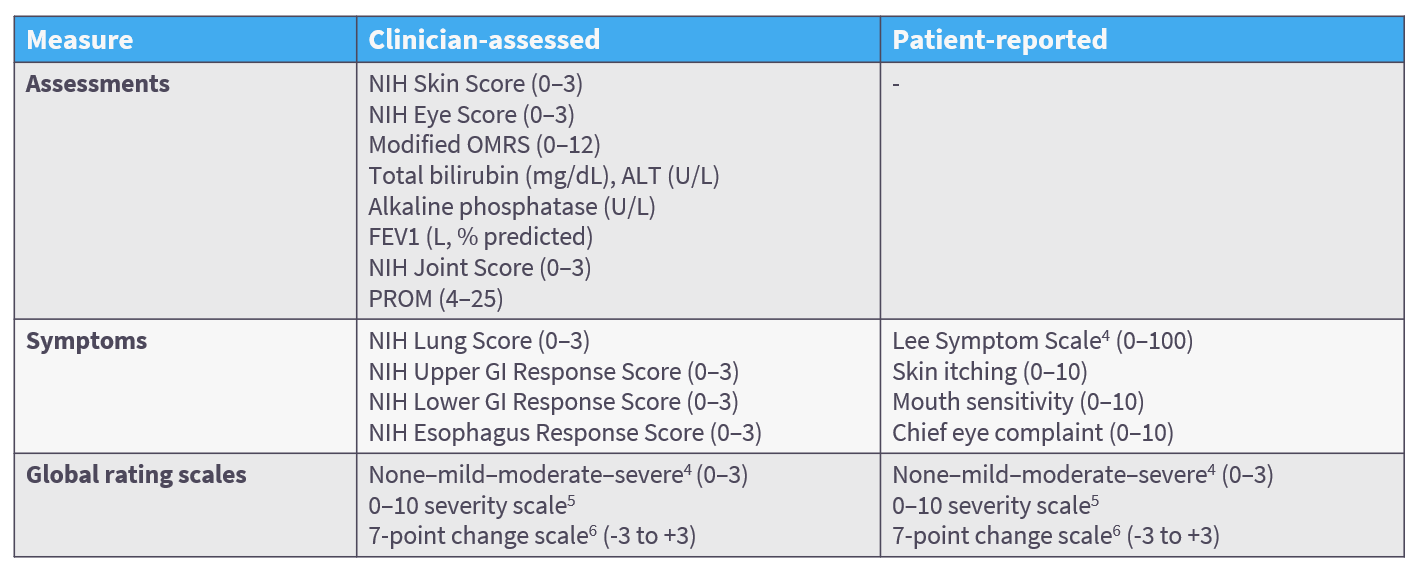
- NIH recommendations define cGvHD-specific core measures for diagnosis and assessment of response and symptom burden (Table 1).3
Figure 2. Standardized assessment of aGvHD: Guidance from the MAGIC consortium2
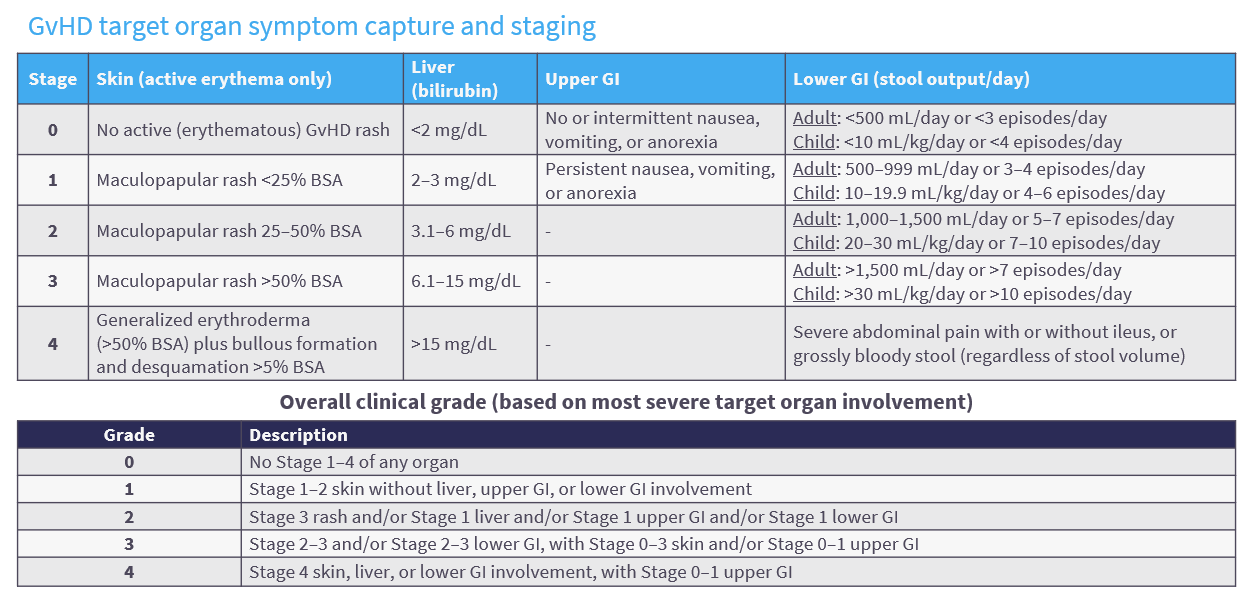
Table 1. Standardized assessment of cGvHD: Recommendations from the NIH3–6
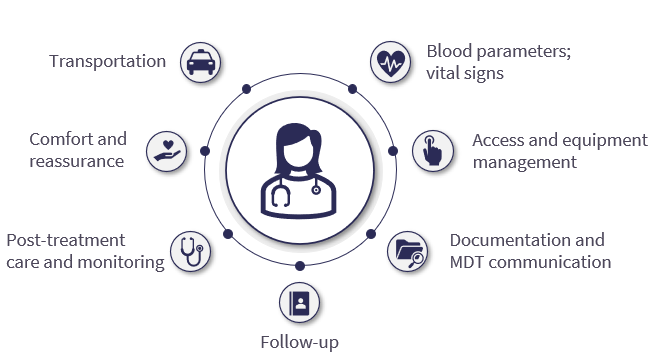
- Kenyon outlines key nursing considerations for administration of ECP therapy (Figure 3).
Figure 3. Nursing considerations during ECP treatment days
- Patient education and support are key components of care for patients receiving ECP, and can be delivered through a range of approaches:
- Explaining the ECP process. For example, by providing visual materials, or describing the procedure in simple steps.
- Addressing concerns or misconceptions. Concerns may include fear of the unknown, misunderstanding the purpose of treatment, treatment effectiveness, frequency of visits, and travel commitments.
- Providing support through the long-term commitment of ECP therapy. For example, offering reassurance that the frequency of sessions will usually reduce over time, with treatment response.
- Nurses are essential in enabling a multidisciplinary approach to GvHD care, with several key themes and behaviors underpinning this role:
- Communication: Acting as facilitators, using standardized handover tools (e.g. Situation, Background, Assessment, and Recommendation [SBAR]), and ensuring frequent updates and clear documentation.
- Interprofessional collaboration: Fostering a collaborative environment, using assertive and clear communication regarding patient status, and offering support to peers.
- Advocacy: Ensuring patient advocacy and highlighting the patient voice in care decisions.
- Being a key worker: Coordinating care plans and ensuring continuity of care.
- Knowledge sharing: Promoting a team-based culture and supporting education and training for healthcare professionals (HCPs) involved in GvHD care.
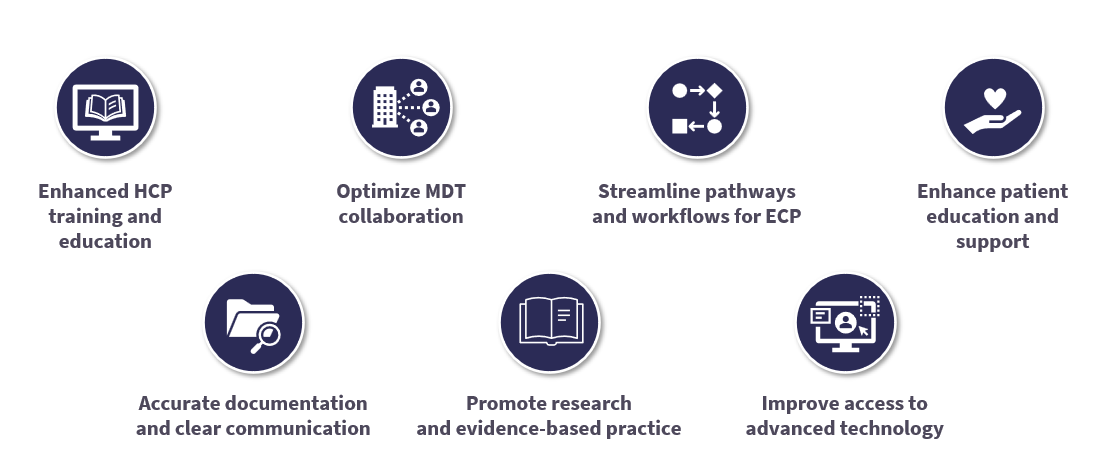
- To conclude, Kenyon details several ways to support nurses in delivering care for patients with GvHD (Figure 4).
Figure 4. How to support nurses in delivering optimal GvHD and ECP care
Q&A
At the end of the presentation, Kenyon responds to a question from the audience, “What are the main challenges you face in ensuring effective communication between patients and the wider healthcare team?”.
- Kenyon stresses the vital role of nurses in patient advocacy, particularly in discussions where patients are not present. She emphasizes that effective advocacy requires an objective understanding of patients’ needs, free from personal assumptions or bias. She also underscores the importance of clear communication through accurate documentation of interactions with patients, ensuring this information is accessible to the wider healthcare team. In addition, she notes the value of nurses being present during difficult conversations with patients, not only to listen, but also to support them in articulating their views.
This educational activity is independently supported by Therakos. All content was developed by the faculty in collaboration with SES. Funders were allowed no influence.
References
Please indicate your level of agreement with the following statements:
The content was clear and easy to understand
The content addressed the learning objectives
The content was relevant to my practice
I will change my clinical practice as a result of this content
This content is accurate as of the date of publication and is not updated retrospectively. Please refer to the latest available evidence, guidelines, and relevant regulatory information when making clinical decisions.
More from this series: