All content on this site is intended for healthcare professionals only. By acknowledging this message and accessing the information on this website you are confirming that you are a healthcare professional. If you are a patient or carer, please visit Know GvHD.
The GvHD Hub website uses a third-party service provided by Google that dynamically translates web content. Translations are machine generated, so may not be an exact or complete translation, and the GvHD Hub cannot guarantee the accuracy of translated content. The GvHD Hub and its employees will not be liable for any direct, indirect, or consequential damages (even if foreseeable) resulting from use of the Google Translate feature. For further support with Google Translate, visit Google Translate Help.


The GVHD Hub is an independent medical education platform, sponsored by Medac and supported through independent educational grants from Incyte, Sanofi and Therakos. Funders are allowed no direct influence on our content. The levels of sponsorship listed are reflective of the amount of funding given. View funders.
Now you can support HCPs in making informed decisions for their patients
Your contribution helps us continuously deliver expertly curated content to HCPs worldwide. You will also have the opportunity to make a content suggestion for consideration and receive updates on the impact contributions are making to our content.
Find out more
Create an account to access:
Bookmark & personalize site content
Receive alerts for new content in your areas of interest
View GvHD content recommended for you
 Matea Meden
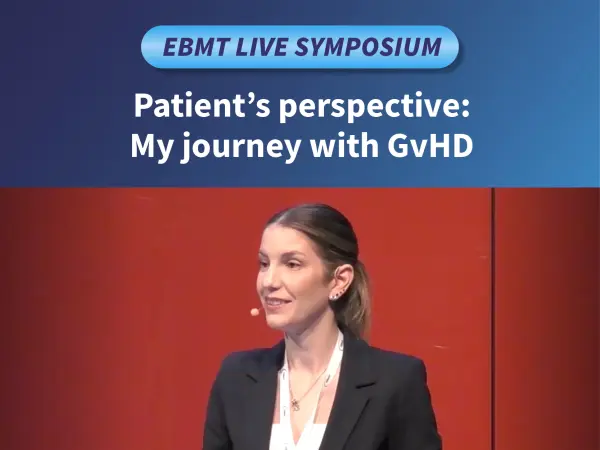
During the 52nd Annual Meeting of the EBMT, the GvHD Hub held a live symposium on March 24, 2026, titled “Focusing GvHD care through the eyes of providers and patients: Practical insights on ECP”. Here, we share a presentation by Matea Meden, Sisan, HR, describing her experience of living with graft-versus-host disease (GvHD).
Symposium | Patient’s perspective: My journey with GvHD
Symposium | Patient’s perspective: My journey with GvHD
Matea describes her journey with GvHD, focusing on its profound impact on her physical health, emotional wellbeing, and overall quality of life. She outlines her treatment pathway, which included steroids, ruxolitinib, and extracorporeal photopheresis (ECP). She highlights both the practical and physical challenges of ECP alongside the gradual clinical improvements she experienced. Matea also shares advice for patients with GvHD, encouraging them to trust the ECP treatment process, communicate openly with their healthcare team, and draw strength from their family, peers, and support networks.
Key points
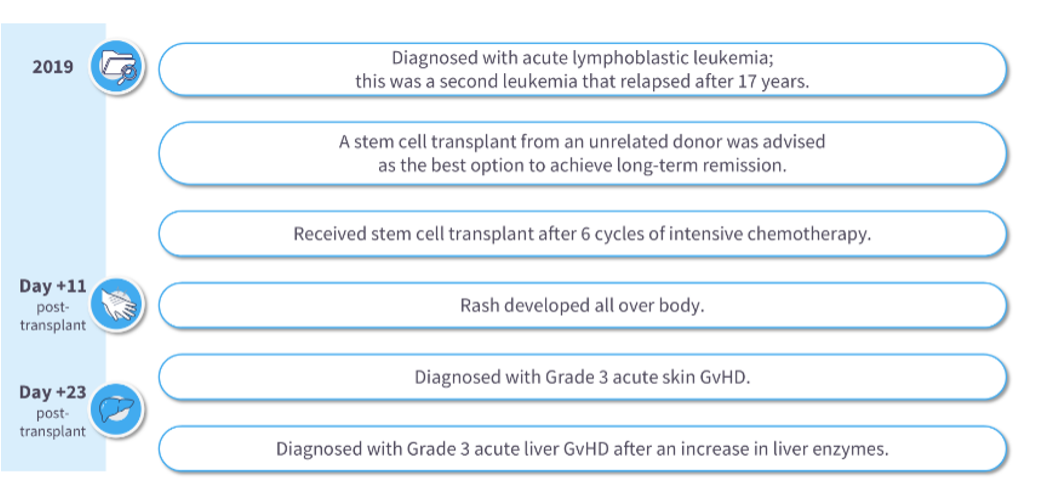
- In 2019, Matea was diagnosed with acute lymphoblastic leukemia (ALL) in 2019. Following a stem cell transplant from an unrelated donor, Matea developed Grade 3 acute GvHD (aGvHD) of the skin and liver (Figure 1).
Figure 1. Background and GvHD diagnosis
- GvHD had a profound impact on her quality of life, including multiple associated complications, such as menstrual bleeding and abdominal pain, muscle weakness, influenza, pneumonia, and rash.
- Matea reflected on the additional burden of the COVID‑19 pandemic, noting that hospital visitor restrictions contributed to feelings of powerlessness, loneliness, and fear.
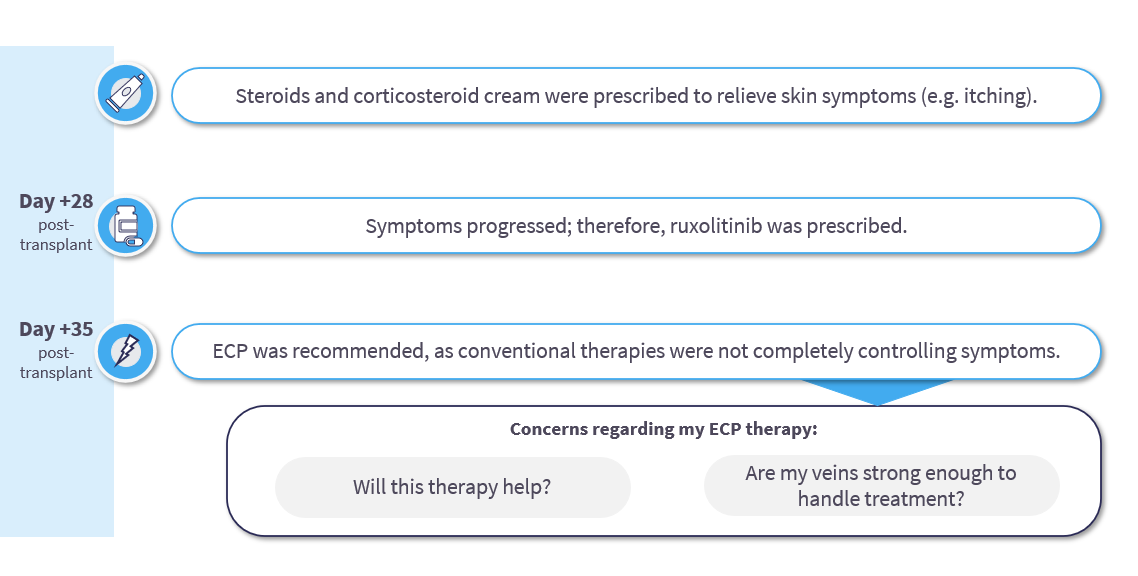
- ECP was recommended on Day 35 post-transplant, as conventional therapies did not control Matea’s symptoms adequately (Figure 2).
Figure 2. Matea’s GvHD treatment journey
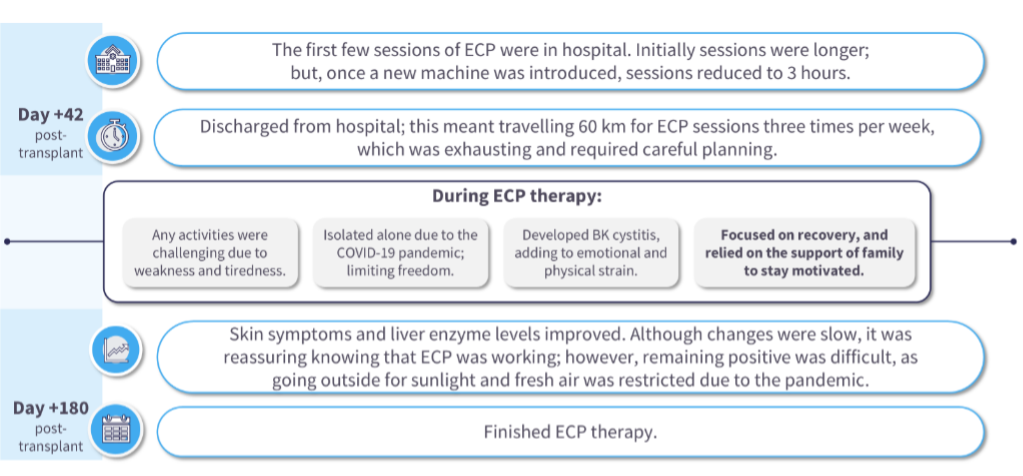
- Reflecting on her experience with ECP therapy (Figure 3), Matea noted that although clinical improvements were gradual, it was reassuring to see the positive effects of treatment.
Figure 3. Matea’s experience with ECP therapy
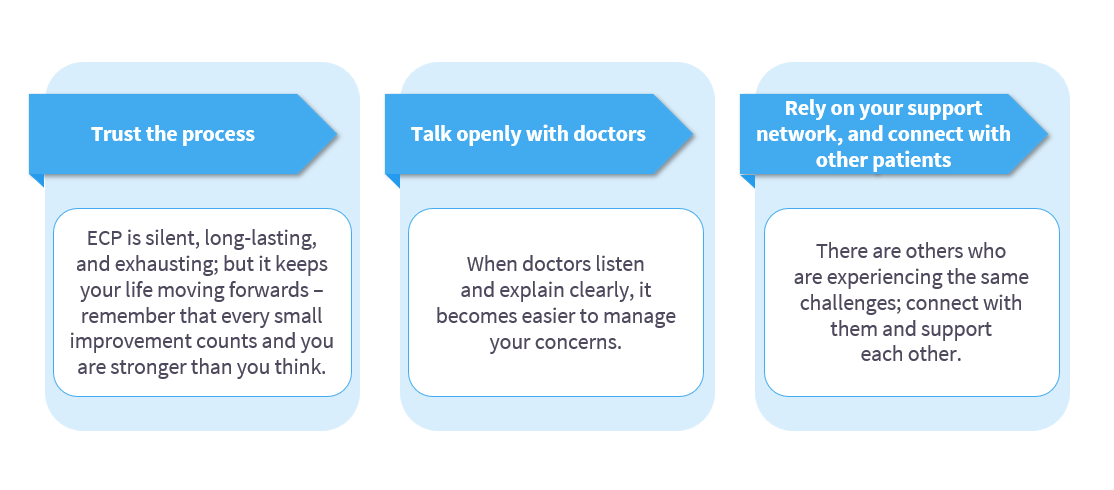
- Matea offers advice for GvHD care teams (Figure 4) and for patients with GvHD (Figure 5).
Figure 4. Advice for GvHD care teams
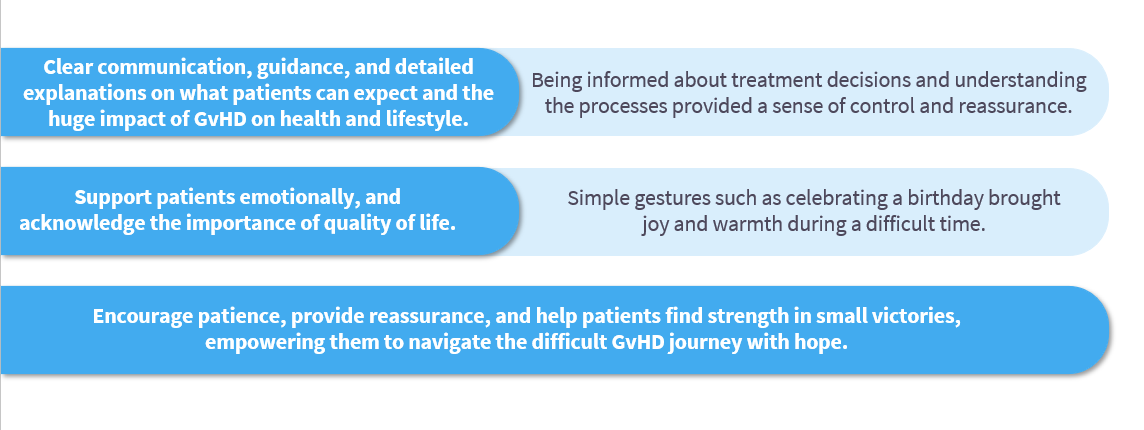
Figure 5. Advice for patients with GvHD
- To conclude, Matea reflects that true recovery involves accepting vulnerability without guilt, while allowing space for happiness, support, and the reclaiming of a life that is rightfully deserved.
Q&A
- Matea explains that ECP treatment itself was not uncomfortable, but it was time‑consuming and physically draining. However, she notes that this exhaustion was part of the broader toll of everything she had already experienced throughout her GvHD journey.
This educational activity is independently supported by Therakos. All content was developed by the faculty in collaboration with SES. Funders were allowed no influence.
Please indicate your level of agreement with the following statements:
The content was clear and easy to understand
The content addressed the learning objectives
The content was relevant to my practice
I will change my clinical practice as a result of this content
This content is accurate as of the date of publication and is not updated retrospectively. Please refer to the latest available evidence, guidelines, and relevant regulatory information when making clinical decisions.
More from this series: